



National Drug Council
Synthetic Drug Study
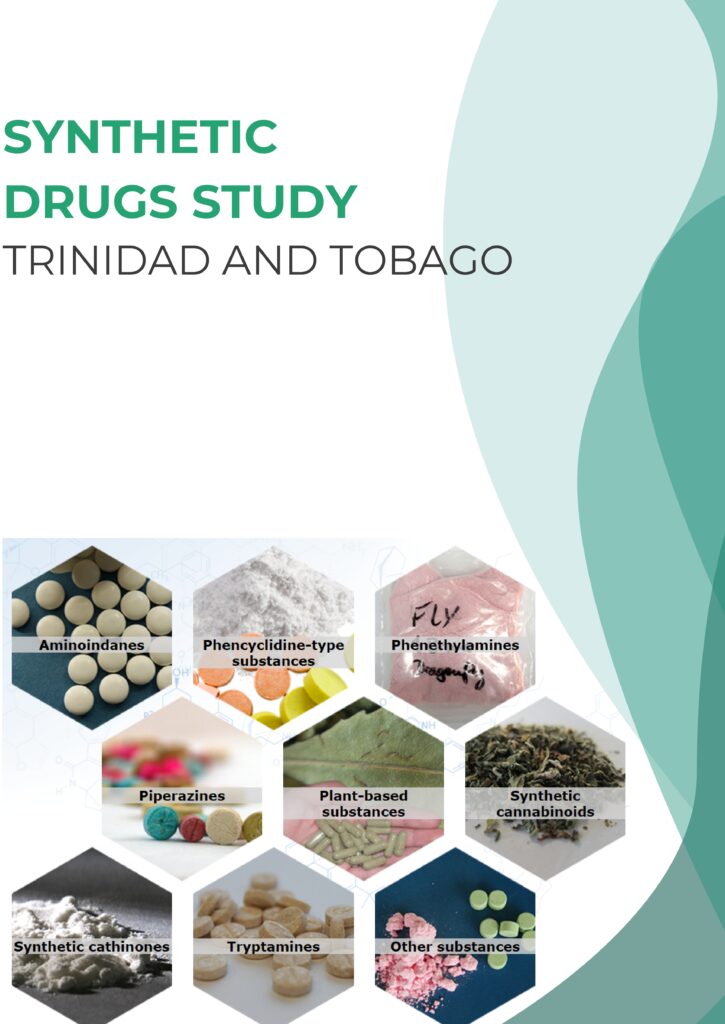
In partnership with OAS/CICAD, Trinidad and Tobago has undertaken a study to understand the rise of synthetic drugs in the region. Synthetic drugs, as opposed to natural drugs, are chemically produced in a laboratory. Their chemical structure can be either identical to or different from naturally occurring drugs, and their effects are designed to mimic or even enhance those of natural drugs. Trinidad and Tobago is situated in a unique transhipment area, where drugs are shipped from Europe and Africa to the United States and vice versa. Synthetic drug consumption has remained small-scale in Latin America and the Caribbean, partially due to a lack of an established consumer market for opioids. The consumption of plant-based drugs such as marijuana and cocaine pave the way for increased synthetic drug use in the population.
Synthetic drugs offer criminals unique advantages, predominantly, lower operational costs, reduced risk of detection and fewer barriers to production.
The first methamphetamine laboratory in Trinidad and Tobago was located and dismantled after an extensive intelligence-led operation in partnership with US law enforcement by the Special Branch Unit officers in August 2023 in south Trinidad. During this raid they discovered a quantity of cash, precursor chemicals, such as boxes of Panadol cold and flu and crystals of varying sizes resembling methamphetamine. Thereafter in 2024 according to data received from the Trinidad and Tobago police service marijuana and cocaine were the top seized drugs. Among the synthetic drugs ecstasy (MDMA) followed by methamphetamine, ketamine and synthetic cathinone (MDPV) were the main seizures.
The development of new synthetic drugs poses a significant challenge to regulatory bodies, public health, law enforcement, and the medical community. These substances are often more potent and unpredictable than their natural counterparts, leading to a higher risk of adverse effects, including overdose and death.